
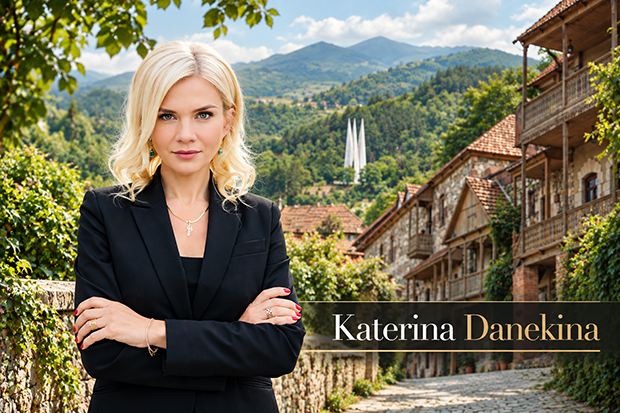
Katerina Danekina, CEO of Green Rock, speaks to Travel and Markets about why Dilijan is emerging as a four-season destination for Gulf travellers, what makes the city different from conventional leisure destinations, and how a new generation of hospitality, cultural and wellness experiences is changing the way visitors can experience the city.
For a traveller coming from the Gulf, why should Dilijan be on their Armenia itinerary?
Katerina Danekina:
Because it offers a very different experience from everyday life in the Gulf — and that contrast is part of its appeal. Imagine leaving the heat of the Gulf and, within a relatively short journey, finding yourself surrounded by forests, cooler air and a completely different rhythm of life. In summer, you can spend the morning walking through the forest, have lunch in the city, explore Armenian culture in the afternoon and finish the day outdoors, without the intense heat you experience elsewhere. But I would not describe Dilijan simply as another stop on an Armenia itinerary. We want it to become a destination you travel to, not somewhere you simply pass through. You can come for nature and discover gastronomy. You can come for a quiet escape and find culture, events and new experiences. You can come for a weekend and realise that you could easily have stayed longer.That is the opportunity we see for travellers from the UAE and the wider Gulf region.
What does Dilijan offer that a Gulf traveller cannot easily experience at home?
Katerina Danekina:
The first thing is the landscape itself. Dilijan is a forest city. It has a completely different visual and sensory environment — green forests, fresh air, walking trails, cooler summers and snow in winter. But nature alone is not the whole story. What makes Dilijan interesting is the combination of nature, culture, gastronomy, wellness and hospitality within a relatively compact destination.
You can spend the morning in the forest and the afternoon discovering Armenian architecture and culture. You can enjoy local gastronomy, then return to an international-standard hotel and spend the evening in a spa, r spend the evening at the Music Hall and enjoy a great concert. That combination is difficult to replicate. And I think this is increasingly what travelers are looking for: not simply another beautiful hotel, but a genuine sense of place — something they cannot experience in exactly the same way somewhere else. The luxury of Dilijan is not only what happens inside the hotel. It is what happens when you step outside.
You describe Dilijan as a four-season destination. What does that look like for a visitor?
Katerina Danekina:
What makes Dilijan special is how differently the city can be experienced throughout the year. In summer, it is cool, green and refreshing — a natural escape from the heat, with long days in the forest, fresh air and plenty of opportunities to be outdoors. In winter, the landscape transforms completely, with snow covering the forests and the city taking on a quieter, more intimate atmosphere. For visitors from warmer climates, experiencing a snowy Dilijan can be an experience, complemented by wellness, gastronomy and cozy stays.
So rather than asking “When is the best time to visit Dilijan?”, I would ask, “Which Dilijan do you want to experience?”
That year-round variety is important for the city’s future as well. It gives visitors different reasons to come back, while helping Dilijan develop as a destination that can attract guests throughout the year
Family travel is particularly important for Gulf travellers. What kind of experience can families expect?
Katerina Danekina:
One of Dilijan’s strengths is that it can appeal to very different interests within the same family. You do not have to choose between an active holiday and a cultural one, or between nature and entertainment — you can have all of them in the same destination.
You can start the day with a hike through the forest, discover Armenia’s history and culture in the afternoon, stop at a café or restaurant, and finish the evening at a concert or another cultural event. For those looking for wellness and relaxation, there are also opportunities to slow down and enjoy the natural environment.
That variety is particularly important for families, because everyone can find something that genuinely interests them. Children can explore and be active, parents can enjoy gastronomy, culture or wellness, and the whole family can still share experiences together.
For Gulf families, I think that is one of Dilijan’s strongest advantages: you come to one destination, but you can experience many different kinds of travel — from hiking and culture to gastronomy, music and wellbeing.
Wellness is becoming increasingly important for Gulf travellers. What makes Dilijan relevant to this trend?
Katerina Danekina:
Dilijan has something that cannot simply be built into a hotel: the environment itself creates the conditions for wellbeing. The forests invite you to walk and hike, the cooler climate makes being outdoors more comfortable, and the natural surroundings create a sense of space that is increasingly difficult to find in busy cities.
For us, wellness is therefore much broader than a spa treatment. It can mean hiking in the forest, eating fresh, locally sourced food, spending time outdoors, discovering local culture, enjoying a treatment, or simply having the freedom to choose how you want to spend your day.
The connection with nature also extends to the table. Dilijan and the wider Tavush region have a strong tradition of using seasonal local produce, with food sourced from nearby farms and, in some cases, from the forest — including wild herbs, berries and mushrooms. That gives gastronomy a very natural place within the overall wellbeing experience.
The upcoming Hyatt Regency Dilijan will add approximately 3,000 square metres of spa and wellness facilities, but the bigger opportunity is to make wellbeing part of the entire stay — not something confined to the spa.
That is where Dilijan can be particularly relevant to Gulf travellers. You can come for comfort and high-quality hospitality, but also be active, eat well, explore nature and culture, and enjoy a completely different environment. Wellness here is not about doing less; it is about having the freedom to feel better in the way that works for you.
Green Rock is developing several major projects in Dilijan. How will this change the experience of staying in the city?
Katerina Danekina:
Our ambition goes beyond developing individual projects. We want to help develop Dilijan into an international, year-round destination — a place where people come not only to visit Armenia, but to stay, experience the city and return.
A destination needs more than a hotel. It needs places to eat, spaces for culture, opportunities to stay longer, events, wellness, education and experiences that give people different reasons to come throughout the year.
The upcoming Hyatt Regency Dilijan will bring an international hospitality brand to the city, with 200 rooms, approximately 43,000 square metres of development, around 3,000 square metres of spa and wellness facilities, and conference capacity for more than 550 people.
But the hotel is only one part of the picture.
The Art Park will bring culture and public space. PPLS Rooms creates opportunities for longer stays and a different type of visitor. Villa3 Community Hub adds a space for community, events and professional interaction. Apicius brings gastronomy together with hospitality education.
What matters is how these places work together. A visitor can come for nature, go hiking, discover Armenian culture, enjoy local and international gastronomy, attend a concert or event, spend time in wellness, or simply stay longer and experience the city at a different pace.
Ultimately, we want Dilijan to become a place people choose as a destination in its own right — not simply a stop on a trip through Armenia.
That is the wider ambition: to help build a vibrant, internationally relevant city that people can experience in different ways, throughout the year, and have a reason to return to.
Green Rock’s investment is part of a much broader vision for Dilijan. What do you ultimately want the city to become?
Katerina Danekina:
We want to help build a city where tourism is one part of a much broader, living ecosystem — a city that is as valuable to the people who live here as it is attractive to those who visit.
That means creating an environment where people can not only come for a few days, but live, work, learn, build businesses, develop their careers and participate in cultural life. Education is an important part of that — because a city’s long-term potential depends on the people who have the opportunity to grow within it.
We also want development to create space for others. More visitors should mean more opportunities for local businesses. More activity should create demand for new services, ideas and talent. More cultural and educational activity should give residents more reasons to engage with their own city.
So we are not thinking about Dilijan simply as a tourism project. We are thinking about how a city creates its own momentum — where tourism, business, education, culture and everyday life strengthen one another.
Ultimately, our ambition is for Dilijan to become a city that does not just attract people, but gives people reasons to build a life here, build something here and keep coming back.
TRF is returning to Dilijan this year, bringing around 150 leaders from tourism, hospitality, investment and related sectors. Why does this matter for the city’s international positioning?
Katerina Danekina:
Because building a destination is not only about physical infrastructure. It is also about being present in the conversations that shape the future of tourism.
TRF — the Tourism Regional Forum — brings around 150 leaders to Dilijan for its second edition, under the theme “Destinations Built to Last.” It gives industry professionals the opportunity to experience Dilijan firsthand — to see the city, its landscape, local businesses and the development taking place here. For us, that is important because we want Dilijan to be recognized not only as a place to visit, but as a destination with its own perspective and potential within the wider tourism industry.
The UAE and the wider Gulf are particularly interesting markets in this context. They have developed significant expertise in hospitality, destination development and tourism investment, while Armenia is an emerging market where destinations are still being shaped. We see real potential for future cooperation between these markets.
But our ambition goes beyond the three days of the forum. We want Dilijan to become a place where international professionals come for conferences, business meetings, cultural events, investment discussions and longer stays.
TRF is one step towards positioning Dilijan as a city with a growing role in the region’s tourism and hospitality landscape.
Where do you see the strongest opportunities for UAE investors and hospitality businesses?
Katerina Danekina:
The opportunity is partly about timing. Dilijan is developing, but it is not yet a mature destination. That means there is still room for new concepts to become part of the ecosystem rather than simply competing within an established one.
The opportunity extends well beyond hotels — to food and beverage, wellness, outdoor experiences, family entertainment, events, destination services and other hospitality-related businesses.
The UAE has extensive experience in building tourism ecosystems and creating destinations that attract international visitors.
Armenia offers something different: an emerging market, a distinctive natural and cultural environment, and a city where there is still room to shape what comes next.
For investors and hospitality businesses, that can be a particularly interesting moment to enter.
If you could give a traveller from the UAE one reason to visit Dilijan, what would it be?
Katerina Danekina:
Come as a visitor, but experience Dilijan like a local. Meet the people, discover the culture, slow down — and give the city time to surprise you.