
As tourism destinations around the world compete for visitors, investment and international attention, the conversation is increasingly moving beyond a simple question of how many people a destination can attract.
The more complex question is what happens next: how visitors stay longer, what brings them back, how tourism benefits local communities, how cultural infrastructure contributes to a city’s identity, and how investment can support development that remains relevant over time.
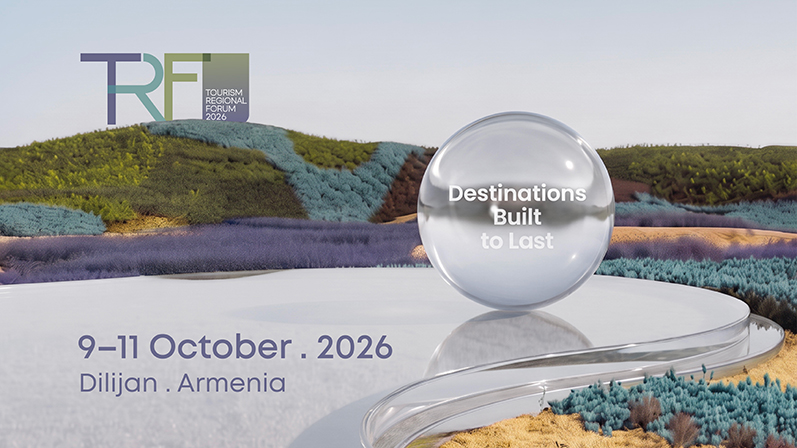
These questions will be at the centre of the Tourism Regional Forum (TRF) 2026, taking place in Dilijan, Armenia, from October 9 to 11 under the theme “Destinations Built to Last.”
The second edition of the forum, initiated by Green Rock Management Group, will bring together around 150 professionals and decision-makers from tourism, hospitality, finance, investment, culture and urban development.
Rather than treating these fields as separate areas, TRF 2026 will examine how they increasingly influence one another in shaping the destinations of the future.
Culture as infrastructure
One of the central discussions at this year’s forum will focus on cultural infrastructure and its role in destination development.
For many destinations, culture has traditionally been viewed as an additional element of the visitor experience. Increasingly, however, cultural institutions, events and creative spaces are becoming part of the infrastructure that defines a city and influences why people choose to visit, stay and return.
TRF 2026 will bring together perspectives from Malta, France and Germany for a discussion on “Cultural Infrastructure as a Destination Driver.”
Among the speakers are Davinia Galea, Founder and CEO of ARC Research & Consultancy; Marie-Automne Peyregne, Member of the Municipal Council and Metropolitan Council of Nice; and German violinist Linus Roth, Founder and Artistic Director of Festival Ibiza Conciertos.
Their different backgrounds reflect the international dimension of the discussion: how cities can use culture not simply to entertain visitors, but to strengthen identity, create new reasons to travel, and build connections with international audiences.
For Dilijan, the topic has particular relevance as the city develops new cultural infrastructure, including a future Music Hall within Green Rock’s multifunctional complex.
Planned as a platform for music and cultural events, the Music Hall could create new opportunities for international performances and collaborations while contributing to the development of cultural tourism in the city.
Such venues can also influence the length and timing of travel. Major performances, festivals and cultural programmes can encourage visitors to plan trips around events, stay for several days and explore other aspects of a destination.
In this sense, culture can become part of the economic infrastructure of tourism.
Financing destinations for the long term
The development of tourism destinations also depends on access to capital and the ability to finance infrastructure over the long term.
TRF 2026 will address this through a dedicated discussion on the role of financial institutions in creating new destinations.
The session will feature Fabrizio Zarcone, Country Manager of the World Bank and IFC in Armenia; Arman Barkhudaryan, IFC’s representative in Armenia; Raimon Zakaria, Head of the EBRD Office in Armenia; and Armen Gasparyan, Director of Corporate Business at Ardshinbank.
Their participation brings the financial sector directly into the destination-development conversation.
The discussion will consider how financial institutions can support tourism infrastructure, new investment projects and the development of competitive destinations — while also looking at the conditions required for projects to create sustainable economic value.
For emerging destinations, financing is not simply a question of building hotels or infrastructure. It is about creating an environment in which different investments can work together and support broader economic development.
Longevity becomes a destination opportunity
Another area gaining attention across the global tourism and hospitality sector is longevity and wellbeing.
Travel associated with health, wellbeing and quality of life is developing beyond the traditional spa and wellness model. Destinations are increasingly exploring how nature, hospitality, preventive health, lifestyle and longer stays can come together to create new forms of visitor experience.
TRF 2026 will examine this shift in a fireside conversation titled “Longevity as an Opportunity for a Destination.”
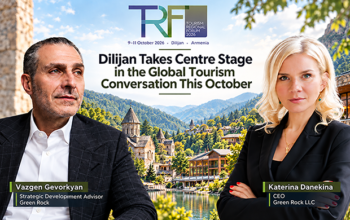
Katerina Danekina, CEO of Green Rock Management Group, will be joined by Christina Michael, Founder of the St. Moritz Longevity Forum, to discuss how longevity is reshaping the tourism and hospitality landscape and what it could mean for destinations seeking new opportunities.
For a destination such as Dilijan, the subject is particularly relevant. Its forests, natural environment, slower pace of life and emerging hospitality infrastructure create a foundation for exploring tourism models built around wellbeing and longer stays.
The city as an interconnected ecosystem
The different sessions of TRF 2026 ultimately return to one central idea: destinations do not develop through isolated projects.
A hotel can increase accommodation capacity, but its impact can extend much further when it is connected to restaurants, cultural venues, education, public spaces, events and local businesses.
The same applies to cultural infrastructure. A concert venue can attract audiences, but its wider impact can include hospitality demand, longer stays, creative-sector opportunities and international partnerships.
Education can strengthen the local workforce, while financial institutions can help turn development concepts into long-term projects.
This interconnected approach is increasingly visible in Dilijan, where a growing hospitality and cultural ecosystem is emerging alongside the city’s existing natural and historical assets.
Green Rock’s multifunctional complex includes the upcoming Hyatt Regency Dilijan, PPLS Rooms Co-living, Villa3 Community Hub, the future Art Park and Music Hall, while Apicius Armenia international hospitality school adds an education and talent-development component to the ecosystem.
The significance of these projects lies not only in the individual facilities, but in the connections between them — accommodation, education, culture, community, business and events contributing to a more diverse destination offering.
From attracting visitors to creating reasons to stay
One of the most important shifts in destination development is the move from attracting visitors to creating more meaningful reasons for them to stay.
A destination with a strong combination of nature, heritage, culture, hospitality, food, wellbeing and events can offer visitors a wider range of experiences and encourage longer stays.
For Dilijan, this creates an opportunity to build on the characteristics that already define the city while adding new layers to its visitor economy.
TRF 2026 will bring this conversation directly into the city, allowing international experts to experience Dilijan while discussing the broader challenges facing destinations globally.
The forum’s three-day programme will therefore be more than a discussion about tourism. It will be a conversation about how cities are financed, how they preserve and develop their identity, how new infrastructure changes the visitor experience, and how destinations can create value that extends beyond a single season.
A regional conversation with an international perspective
With participants coming from different parts of Europe and international institutions represented alongside Armenian public and private-sector leaders, TRF 2026 is designed as a regional platform with a broader international outlook.
For Armenia, it provides an opportunity to connect the country’s tourism and destination-development agenda with international experience and expertise.
For Dilijan, it offers something more specific: the opportunity to host a professional conversation about the future of destinations in a city that is itself undergoing a significant transformation.
The theme “Destinations Built to Last” therefore takes on a practical meaning. Lasting destinations are not defined by a single hotel, attraction or visitor campaign. They are built through the interaction of infrastructure, investment, culture, talent, community and a clear long-term vision.
From October 9 to 11, TRF 2026 will bring these perspectives together in Dilijan — creating a platform not only to discuss where tourism is heading, but also to examine what it takes to build destinations capable of evolving with it.